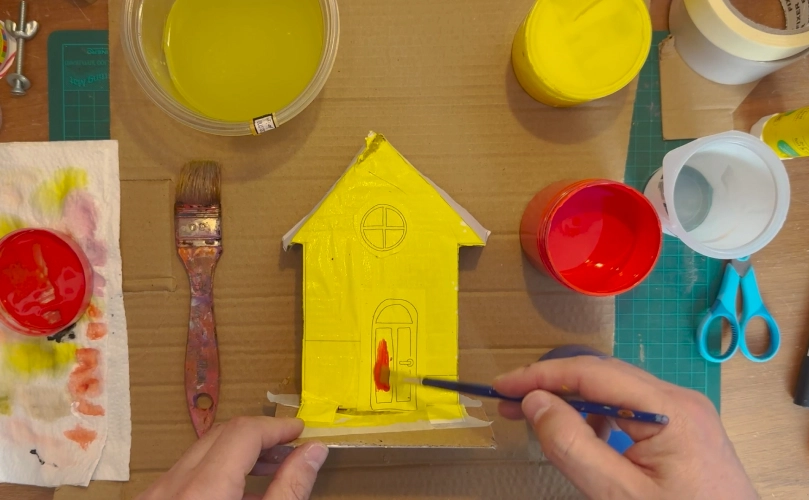

My daughter was coloring when the marker ran out. She threw it across the room.
A small thing, but her frustration was big and real. In that moment, telling her to "calm down" wouldn't help. She didn't know how.
Coping skills aren't natural. They're learned through practice — in small, safe moments before the big ones come. Craft activities create exactly these moments. We can predict what feelings will surface (frustration, disappointment, impatience) and guide children through them in real time.
The activities below aren't about making pretty things. They're designed to bring up difficult feelings in manageable doses, so children can practice working through them.
8 Coping Skills Activities for Kids
1. The Glitter Jar

The classic calm-down tool, but the making of it is where the coping practice happens. Children have to wait for glue to settle, resist shaking it before it's ready, tolerate imperfection. We name these moments: "It's hard to wait. What does waiting feel like in your body?"
Materials: Clear jar or bottle, water, glitter, glue or glycerin
Social-emotional challenges:
- The child wants to shake it before it's ready. "Your hands really want to shake it. Can you notice that feeling and wait a little longer?"
- The glitter doesn't look how they imagined. "It's different than you planned. What do you notice about how that feels?"
- Someone else's jar looks "better." Comparison brings up feelings. "Your jar is yours. What do you like about it?"
- The glitter settles too fast or too slow. "Sometimes things don't work exactly how we want. What could we try?"
- Practice using it: "When the glitter is swirling, that's like when our feelings are big. Watch it settle."
2. The Feelings Faces
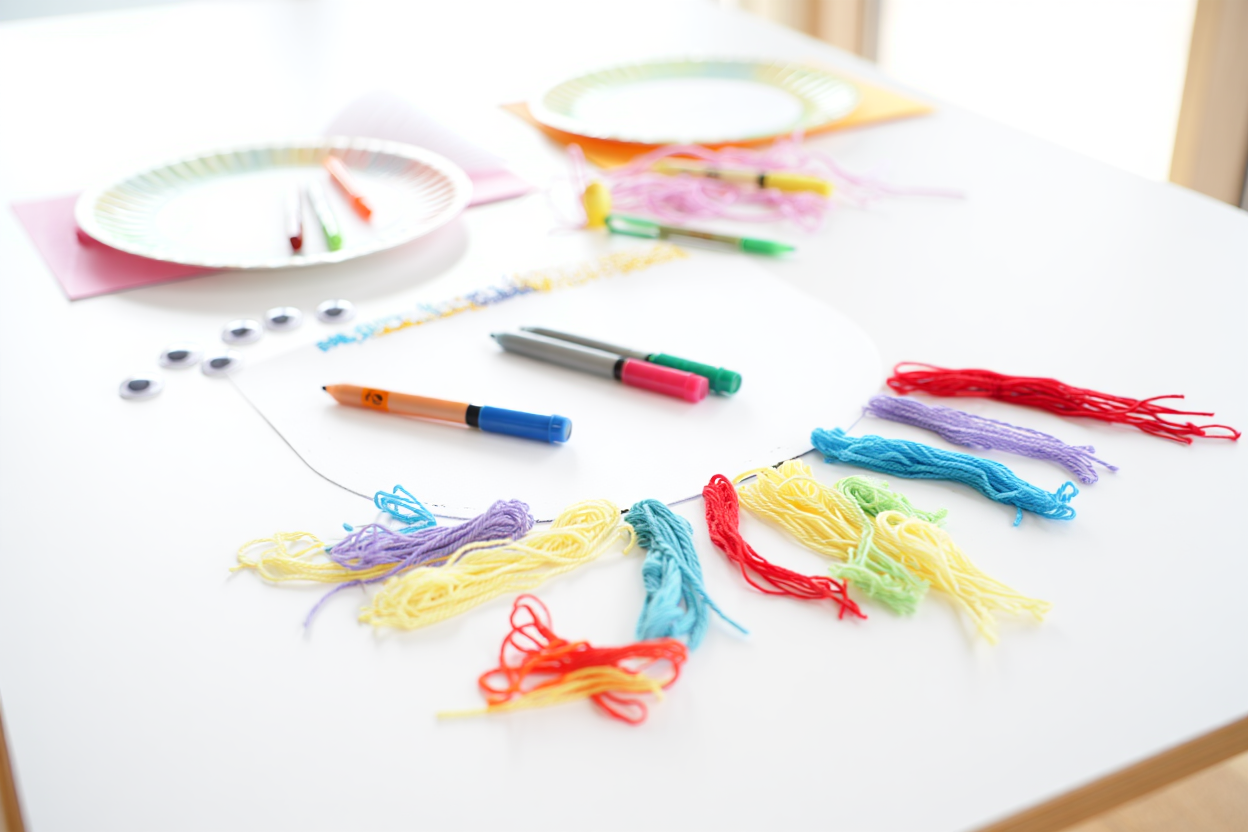
Children draw or make faces showing different emotions — not just happy and sad, but frustrated, worried, jealous, disappointed. Naming feelings is the first coping skill. We can't work with what we can't name.
Materials: Paper plates or circles, markers, yarn for hair (optional)
Social-emotional challenges:
- The child only wants to make happy faces. Don't correct — wonder with them: "What about when you feel other things?"
- Making an angry face brings up uncomfortable feelings. "It's okay to make an angry face. Everyone feels angry sometimes."
- The child makes a face that matches how they're feeling right now. Notice it: "That face looks frustrated. Are you feeling a little frustrated too?"
- Someone judges another's face: "That doesn't look sad!" Ask: "Different people show feelings different ways."
- Practice using them: "When you feel something big, can you show me which face matches?"
3. The Stress Ball

Filling a balloon with flour or rice requires patience — the flour spills, the balloon is hard to hold open, it doesn't fill as fast as you want. The frustration is the activity. We're practicing staying calm when things are difficult.
Materials: Balloons, flour or rice, funnel, markers for decorating
Social-emotional challenges:
- Flour spills. Frustration rises. "I see you're getting frustrated. What could help right now?"
- The balloon pops or deflates. "That's disappointing. It's okay to feel upset. Ready to try again?"
- Someone finishes faster and theirs looks better. "Comparing can feel hard. Focus on yours."
- The child wants to give up. "This is tricky. You can take a break and come back."
- Practice using it: "When you feel tight inside, squeeze this. What happens in your body?"
4. The Breathing Buddy

Children make a small stuffed creature, then practice placing it on their belly and watching it rise and fall with their breath. The craft is simple. The practice — paying attention to breathing when calm — prepares them for using it when upset.
Materials: Socks or fabric, stuffing or cotton balls, markers or buttons
Social-emotional challenges:
- The child rushes through making it. "Take your time. This buddy is going to help you feel calm."
- The stuffing doesn't go in easily. "This is the tricky part. Slow down. You've got it."
- Someone's looks different than expected. "It's yours. What name will you give it?"
- The child won't slow down to practice the breathing. "Let's try three breaths. Watch your buddy go up and down."
- Practice daily: "Put your buddy on your belly. Can you make it rise slowly?"
5. The Worry Box

Children decorate a box, then write or draw their worries on paper to put inside. The act of externalizing worries — getting them out of your head and into a container — is a real coping strategy. The craft makes it concrete.
Materials: Small box (tissue box works), paper, markers, decorating supplies
Social-emotional challenges:
- The child says they don't have any worries. "Everyone has things they think about. Even small things count."
- A worry comes up that's bigger than expected. Let it be there. "That sounds important. Into the box it goes."
- The child wants to read someone else's worries. "Those are private. Your worries are private too, unless you want to share."
- The child keeps taking worries back out. "Once they're in, they stay in. The box holds them for you."
- Practice regularly: "Before bed, let's put today's worries in the box."
6. Calming Coloring Page
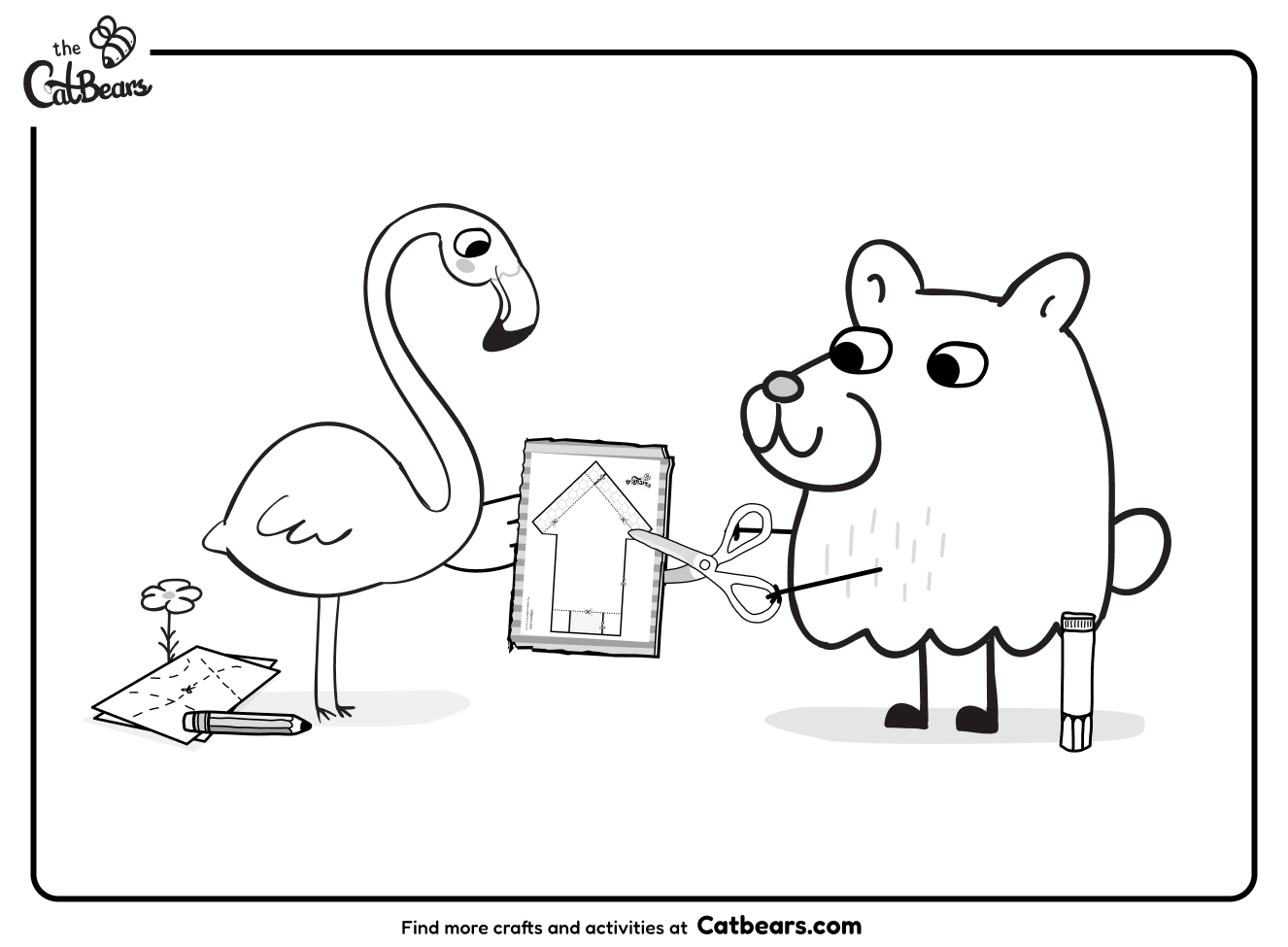
Find the activity here: Flamingo & Bear Calming Coloring Page →
Coloring is one of the most accessible calming activities. The repetitive motion, the focus on staying in the lines, the sensory experience of colors — it naturally slows breathing and quiets busy minds. We use a friendship coloring page so children can practice calming together.
Materials: Printed coloring page, crayons or colored pencils
Social-emotional challenges:
- The child rushes through it. "Coloring slowly is the practice. Notice each stroke."
- The child gets frustrated about coloring outside the lines. "It's okay. This isn't about perfection — it's about how coloring makes you feel."
- Someone finishes quickly and wants to stop. "Your friend is still coloring. What could you do? Maybe add more details to yours."
- The child says coloring is boring. "Sometimes boring is what our brains need. Let's try five minutes and see how you feel."
- Practice using it: "You seem upset. Would coloring help you feel calmer?"
7. The Feelings Thermometer

A simple craft — a paper thermometer where children mark their emotional level. But the practice of checking in, noticing how big a feeling is, and watching it change — this builds self-awareness that becomes a coping skill.
Materials: Paper, markers, a clothespin or slider to mark levels
Social-emotional challenges:
- The child always puts themselves at the same level. "Really notice. Is today the same as yesterday?"
- The child doesn't want to admit to a big feeling. "All levels are okay. The thermometer just helps us notice."
- Someone judges another's level: "You're not that upset!" Ask: "Only she knows how she feels inside."
- The child wants to change their level to match a friend's. "Your feelings are yours. They don't have to match."
- Practice throughout the day: "Where are you on your thermometer right now? Check again in an hour."
8. The Before and After Drawing

Children draw themselves when they're feeling a big emotion, then draw what they look like after using a coping strategy. Visualizing the change makes it real. They can see that feelings shift — they don't stay stuck.
Materials: Paper (folded in half), crayons or markers
Social-emotional challenges:
- The child can only draw the "before" — they can't imagine the "after." "What would help you feel different? Let's think together."
- The child draws themselves hitting or yelling in the "before." Don't correct it. "That's what it feels like sometimes. What helps after that?"
- The "after" drawing shows completely happy. "Usually we feel a little better, not all the way better. That's okay."
- The child has trouble identifying what helps. "Let's try some things and see. Breathing? Squeezing something? Walking?"
- Save the drawings: "Next time you feel like your 'before' picture, remember your 'after' is possible."
Why These Activities Work
Coping skills taught in calm moments are available in hard moments. That's the research, and it matches what parents see: children who have practiced noticing their feelings and using strategies actually use them when upset.
These crafts aren't magic. They're practice. The glitter jar doesn't calm anyone down unless they've spent time watching it settle when they weren't already upset. The breathing buddy doesn't help unless they've practiced slow breathing when they felt fine.
A few weeks after we made the worry box, my daughter said: "Mom, I have something for the box." She wrote it down herself, folded the paper, and put it inside.
The worry didn't disappear. But she had something to do with it other than hold it alone. That's what coping looks like — not erasing hard feelings, but having ways to move through them.